Part 1
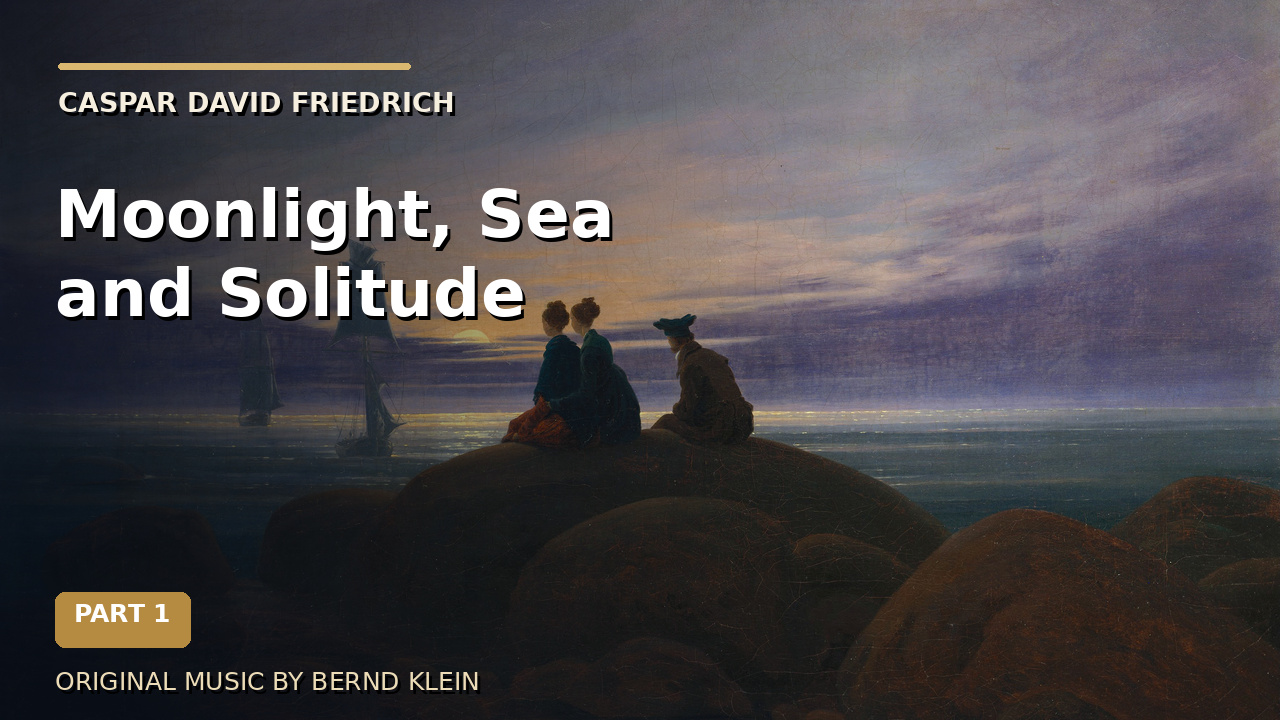
Moonlight, Sea and Solitude
Moonlit shores, evening skies and the profound solitude through which Friedrich’s landscapes become inner worlds.
Watch the film on YouTube →KleinTones · A new five-part art-film series
63 paintings, five thematic films and more than two hours of original music by Bernd Klein.
Caspar David Friedrich (1774–1840) is one of the defining painters of German Romanticism. Yet his pictures are never merely landscapes. Mist, moonlight, bare trees, shattered ice, distant mountains and ruined abbeys become images of human experience.
His famous figures seen from behind stand before overwhelming nature and look in the same direction as we do. Friedrich does not tell us what they feel. Instead, he opens a space in which wonder, solitude, hope and an intimation of infinity can meet.
Friedrich was born in Greifswald in 1774, when the town belonged to Swedish Pomerania. After his first drawing studies there, he attended the Academy of Fine Arts in Copenhagen. In 1798 he moved to Dresden, where he spent most of the rest of his life and became a central figure of German Romanticism.
He often found his motifs while walking along the Baltic coast, on Rügen, in the Giant Mountains, the Harz and around Dresden. Yet the finished paintings are rarely exact records of a single place. Friedrich combined observations, altered scale and rearranged landscape elements so that nature became a psychological and spiritual pictorial world.
His apparently quiet paintings are carefully constructed. Horizons, trees, rocks, ruins and figures often have a precise compositional role. He became famous for the Rückenfigur: a person seen from behind, looking into the same landscape as we do. The viewer is therefore not merely an observer, but is drawn almost physically into the act of contemplation.
Friedrich enjoyed periods of success during his lifetime but increasingly fell out of fashion in his later years. His work was rediscovered around 1900. Today he is regarded as one of Europe's great landscape painters and as an artist who transformed landscape into a vehicle for memory, spirituality, solitude and existential experience.
The film series
Each film follows a distinct theme. Slow camera movement enters selected details and then restores the view of the complete painting. Every new musical work begins with a new image. All compositions are by Bernd Klein.
Part 1
Moonlit shores, evening skies and the profound solitude through which Friedrich’s landscapes become inner worlds.
Watch the film on YouTube →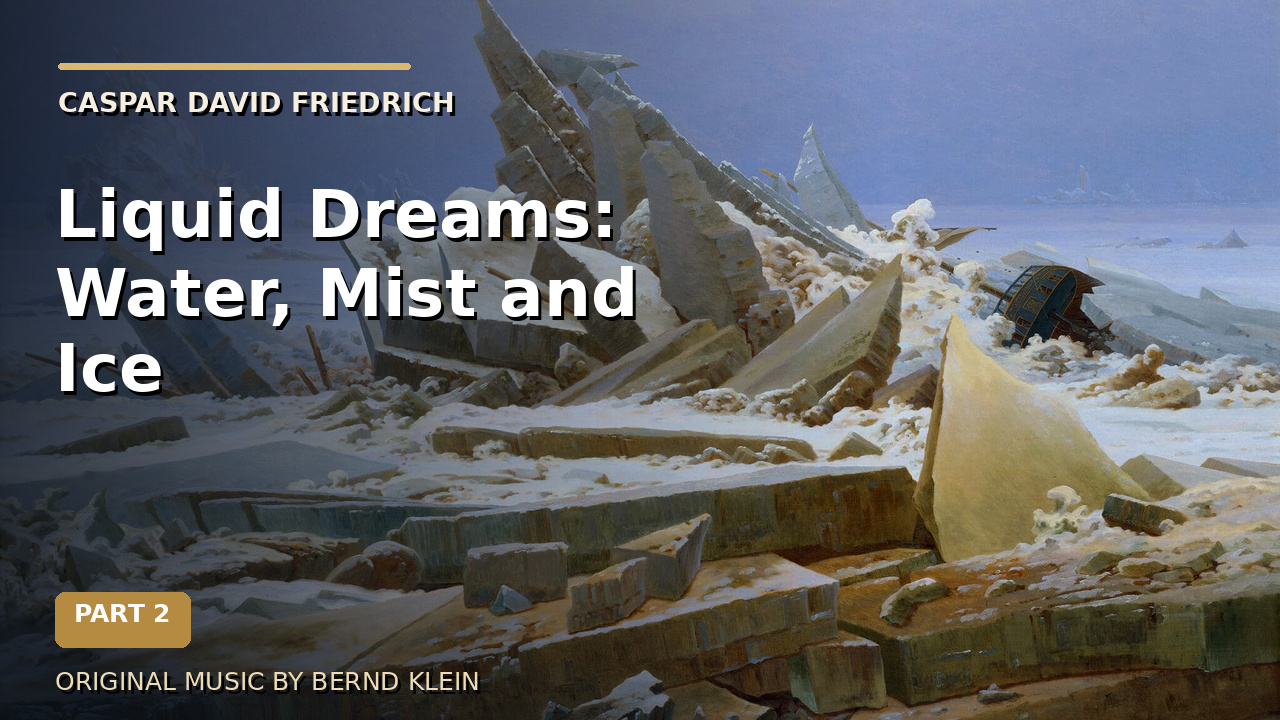
Part 2
Water in all its forms: rivers, mist, clouds, ocean and ice, accompanied by the complete “Liquid Dreams Symphony.”
Watch the film on YouTube →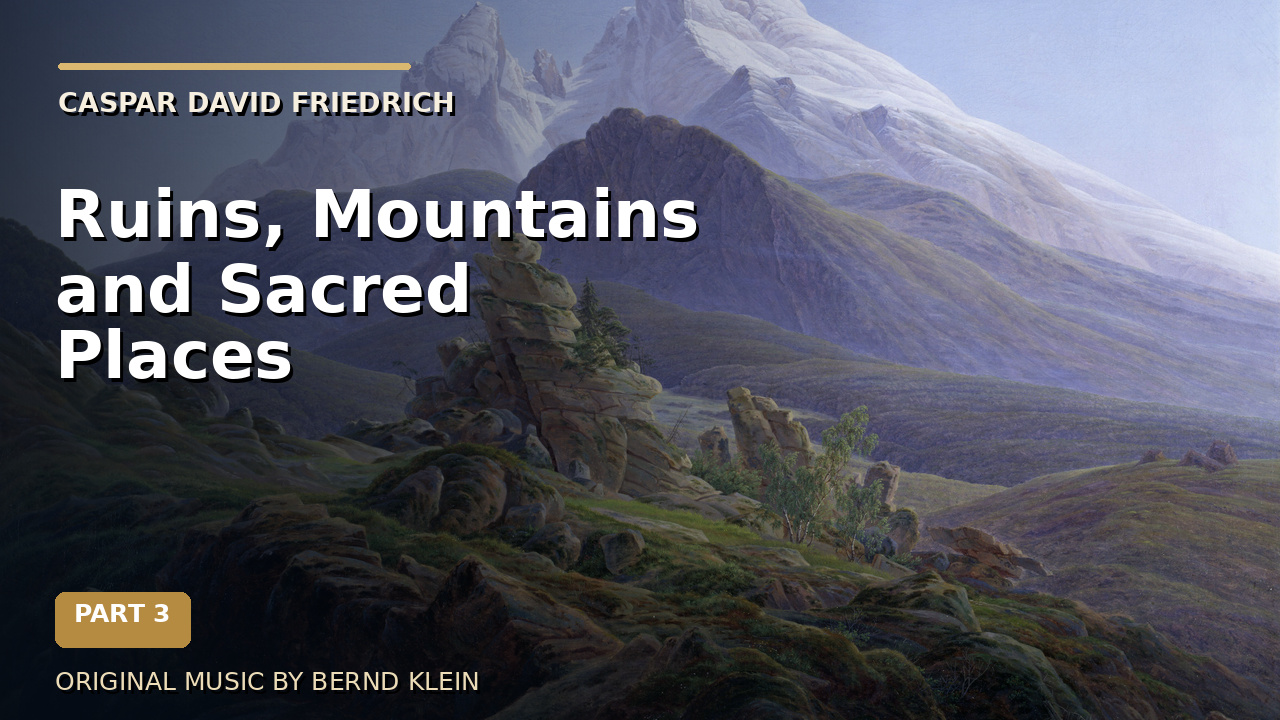
Part 3
Mountains like cathedrals, Gothic ruins and ancient stones as places of memory, sublimity and spiritual stillness.
Watch the film on YouTube →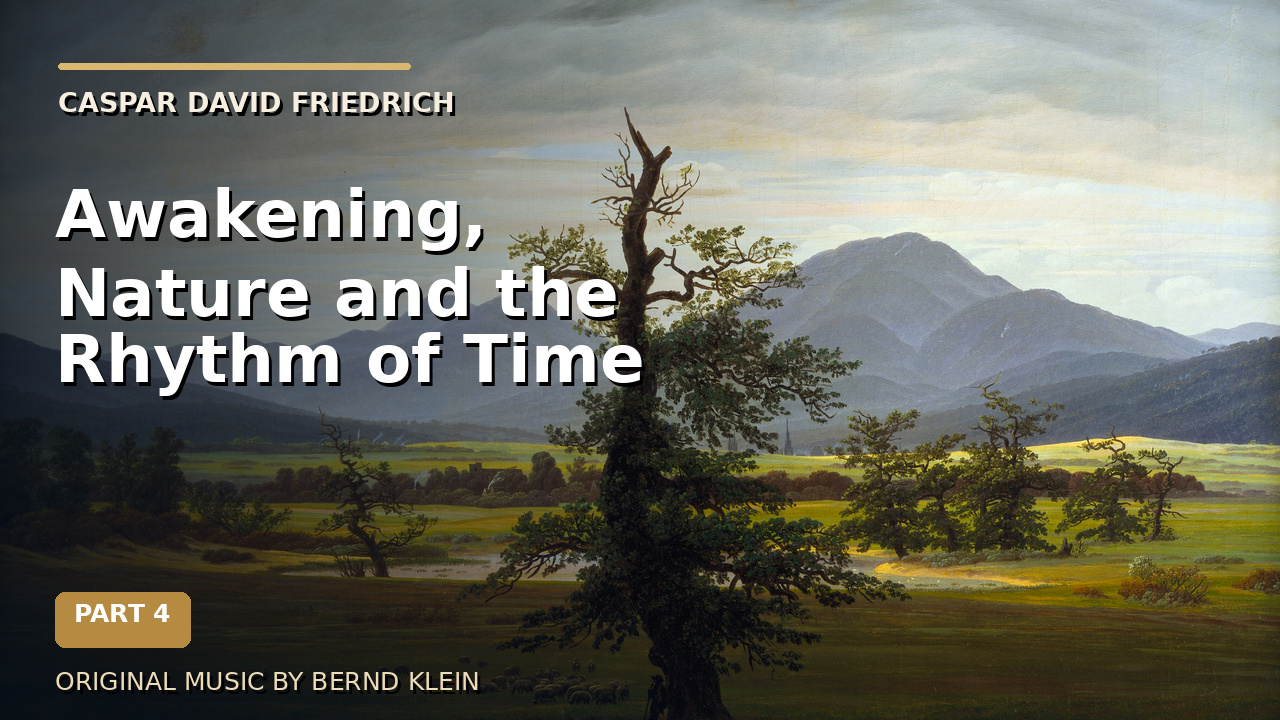
Part 4
Spring, the hours of the day and recurring light: nature as an image of change, renewal and the rhythm of time.
Watch the film on YouTube →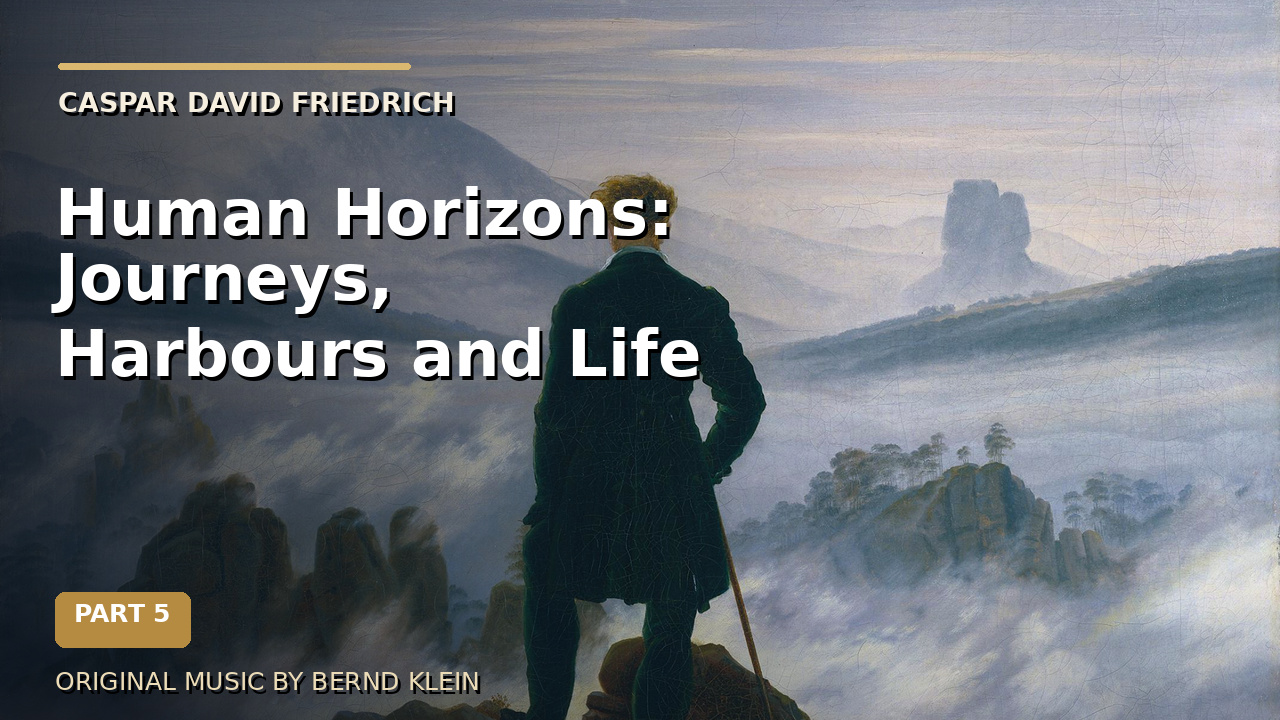
Part 5
Wanderers, ships and people before infinite horizons: a journey through departure, memory and the stages of life.
Watch the film on YouTube →Across the five films, each of the 63 selected paintings and every musical work appears exactly once. Together, they form more than a succession of images: a journey through sea and moonlight, water and ice, mountains and ruins, nature and time, and finally the human being before an open horizon.