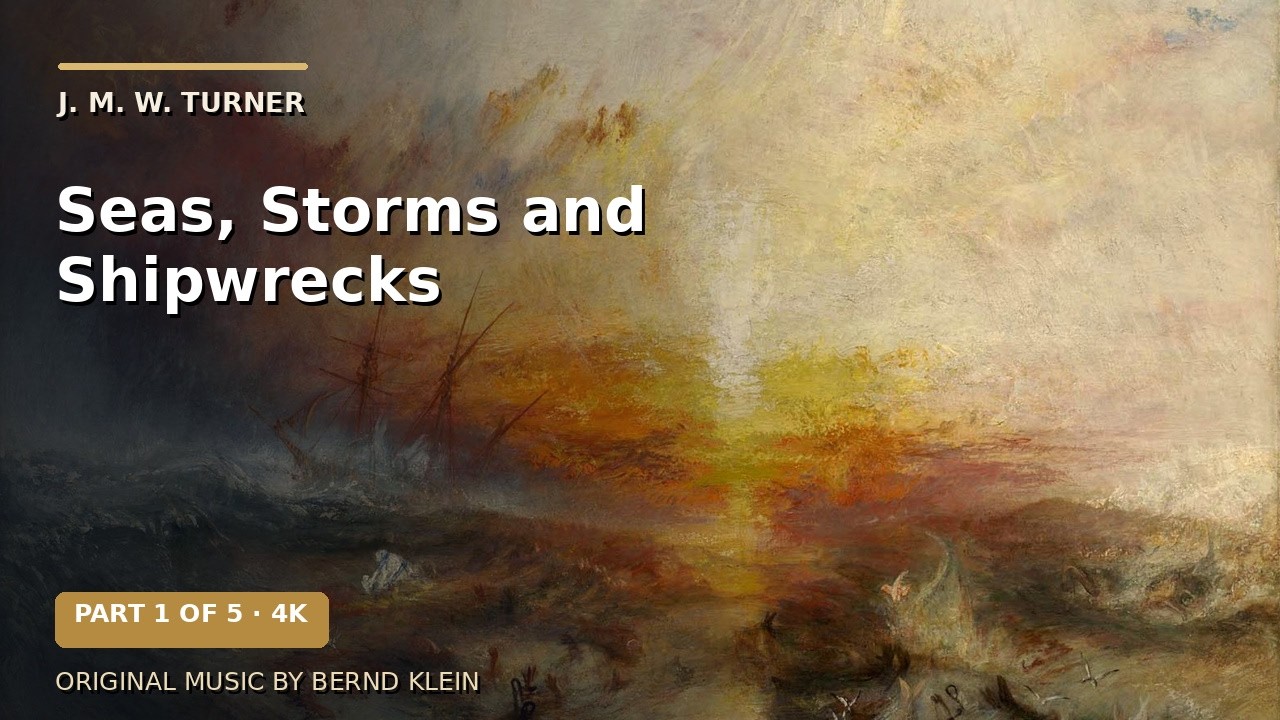
Part 1
Seas, Storms and Shipwrecks
Sea, storm, ships and shipwreck: Turner presents nature as beauty, danger and overwhelming movement.
Watch the film on YouTube →KleinTones · Five-part 4K art-film series
Five thematic films devoted to one of the most radical painters of light, weather and movement.
Joseph Mallord William Turner (1775–1851) transformed landscape painting into an experiment with light, colour, atmosphere and movement. Sea and storm, fire and steam, cities in mist and mountains in changing light often seem to dissolve into perception itself.
The five films approach different sides of this work. Slow camera movement enters selected details before returning to the complete composition; my music is not intended merely as background, but as a second temporal space in which the paintings can unfold.
Turner was born in London in 1775 and entered the Royal Academy Schools at only fourteen. He was already exhibiting watercolours as a teenager. Over the following decades, the exceptionally precise draughtsman and topographical observer developed into an artist who continually pushed landscape painting beyond its established boundaries.
Travel was essential to his art. Turner explored Britain extensively and repeatedly travelled through France, Switzerland, Germany and Italy. Venice, the Alps and the sea became especially important sources of imagery, recorded in countless sketches and later transformed in the studio.
Turner was equally accomplished in watercolour and oil. Transparent washes, glazing, wiping, scraping and strong accents allowed him to make light almost the true subject of a painting rather than simply something represented within it. In his later works, solid forms often begin to dissolve into rain, steam, spray, fire or sunlight.
This increasingly free treatment of colour and atmosphere made Turner a key figure on the road towards modern painting. Later artists and critics regarded him as an important precursor of Impressionism, while some late works can appear strikingly close to abstraction to modern eyes. At the same time, Turner remained deeply connected to the traditions of landscape and history painting.
The film series
All five parts have now been published. The order below is the order of the completed series.
Part 1
Sea, storm, ships and shipwreck: Turner presents nature as beauty, danger and overwhelming movement.
Watch the film on YouTube →
Part 2
Fire, steam and speed lead into Turner’s vision of industrialisation and the emerging modern world.
Watch the film on YouTube →
Part 3
Venice, Rome and Zurich appear as cities of light, water, memory and atmospheric mist.
Watch the film on YouTube →
Part 4
Mountains, castles and Stonehenge bring geology, history and architecture together with Turner’s sense of the sublime.
Watch the film on YouTube →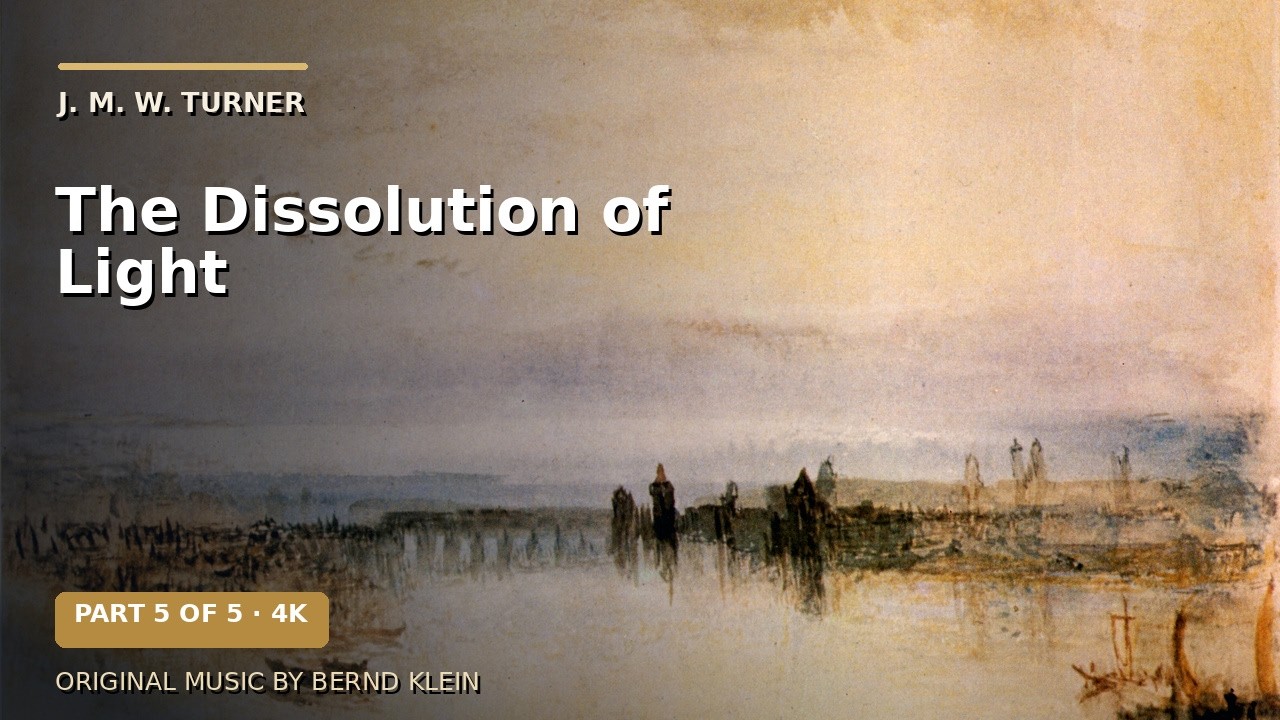
Part 5
Lakes, waterfalls and ruins dissolve into light and atmosphere. The final film shows especially clearly Turner’s increasingly free treatment of colour, light and form.
Watch the film on YouTube →This film featuring a Turner painting was created independently and is deliberately not part of the five-part series.
Sunrise, light and quiet visual spaces with music for oboe and piano.
Together, the five films move from sea and elemental forces through the industrial modern world and European cities to mountains, architecture and Turner’s increasingly free treatment of light and colour.